Saturday, June 25, 2011

Media-Whore D'Oeuvres


"While endorsements have begun to trickle in for Republican presidential candidates as they battle for standing in the race for the 2012 nomination, no game-changing endorsements haven't been landed yet. The Hill put together a list with some of the endorsements the presidential candidates covet most, listed below in no particular order." (TheHill)


"Photographer Howard Schatz had an idea: place actors in a series of roles and dramatic situations to reveal the essence of their characters. Such was the premise behind his book, In Character: Actors Acting, which captures some of Hollywood’s most emotive stars in the act of, well, making faces. Luckily for us, he continued the tradition for the pages of Vanity Fair. Here are some of the best ... FRED ARMISEN Left: You’re at your first official White House dinner, trying not to nod off while Joe Biden regales your table with tales of brokering backroom deals with Howard Baker in the 70s. Center: You’re in a meeting with your national-security team when an aide whispers in your ear that the Reverend Jeremiah Wright has just shown up unannounced at the White House gates. Right: A month after your inauguration, you discover that Dick Cheney’s 'undisclosed location' was a pantry in the private residence—and he’s still there!" (VanityFair)


"Frank Schaeffer saw the birth of the religious right from the inside. His father, the brilliant Presbyterian theologian Francis Schaeffer, was the intellectual father of the movement. He channeled the countercultural spiritual yearnings of '60s-era Jesus Freaks into the right-wing movement that now dominates the Republican Party. It was Schaeffer who first led evangelicals to mobilize against abortion, for many years ignored as primarily a Catholic concern. His three-party documentary, How Should We Then Live?. which Frank produced, inspired a whole generation of evangelicals into politics, including Michele Bachmann, who cites it as a formative influence. As his son, Frank was a conservative Christian celebrity in his own right, keynoting the Religious Broadcasters Convention and the Southern Baptist Convention. Now, though, he has a new message. The Christian right, he says, is fundamentally motivated by an anxious, terrified obsession with sex, an obsession that once drove him as well. 'Since the 1970s, the American culture wars have revolved around a fear of sex and women no less insane and destructive than any horror story to come out of Afghanistan,' he writes in his intriguing if hyperbolic new book, Sex, Mom and God." (TheDailyBeast)


"And who is the John McCain of 2012? No one. Neo-Reaganite foreign policy appears to have exhausted itself after only a decade ... Today's conservatives seem to want to return to the party's origins -- thus the popularity of the Tea Party label. Thomas Jefferson, the first Republican president, also deeply distrusted what he called the 'central' government, and opposed a standing army, a diplomatic service, and, above all, warfare, as instruments for the aggrandizement of the state and thus the diminishment of personal liberty (though he proved quite willing both to threaten and to wage war if the circumstances required it). The Republicans became the party of bellicosity only at the end of the 19th century, under Presidents William McKinley and Roosevelt, when their business base recognized the economic value of foreign conquest -- and when it had forsaken its small-government principles. When the GOP again began to define itself against activist government, as it did in the face of the New Deal, its partisans also turned decisively away from engagement with the world. Maybe it's too soon to say that the Republican Party has committed itself to genuine small-government conservatism: Certainly Romney and Gov. Tim Pawlenty, the most politically seasoned of the current candidates and the ones most likely to be nominated, favor increasing the defense budget even as they cut everything else to ribbons. (Bill) Kristol has half-seriously suggesteda ticket of Rep. Paul Ryan, the zealous budget-cutter, and Marco Rubio, the freshman Florida senator, who apparently favors 'more decisive action in Libya.' But the contradiction between seeking the smallest and least active federal government possible, and a muscular foreign policy can't be sustained over time. That's why the GOP has traditionally embraced one or the other, but not both. Is it the Democrats, then, who are the natural heirs to the doctrine of benevolent global hegemony? Probably not, if only because the hegemonic era is now behind us, presumably forever. In part for that very reason, and partly also in reaction to Bush's unilateralism, this administration is prepared to lead, if not from behind, then at least from the side, giving both authority and responsibility to allies. The Obama national security strategy does not insist upon unrivaled military superiority. And Obama is a cautious figure, acutely aware of the limits of the possible. So no, today's Democratic Party will probably not become the home for disappointed foreign-policy neoconservatives.  (ForeignPolicy)


"This year’s Emmy race for Outstanding Drama Series will continue cable’s dominance in this most prestigious category. Cable claimed 10 of the 13 nomination spots over the past two years, and 13 of 19 since 2008. By contrast, cable earned a mere nine nods combined in the seven years between 2001 and 2007 when the networks still ruled. The shift from broadcast is so extreme in 2011 that CBS’ The Good Wife is considered the only network series with a solid shot to earn its second nomination in as many years. (Though not in that league, NBC/DirecTV’s Friday Night Lights, NBC’s Parenthood, and CBS’ Blue Bloods deserve consideration while ABC has entered a rebuilding phase.) The sad reality is that the broadcast networks, which just signed a new eight-year deal with the Academy of Television Arts & Sciences to carry the Emmys, are facing a possible first-ever shutout from the top drama series category. That’s because of the continuing strength and ambition of programming on cable — in particular, HBO in a return to form, and AMC still on a roll." (Nikki Finke)


"Samantha Ronson's secret talent? Bowling. The deejay took a break from manning the decks at a party for sister Charlotte's JCPenney line, I Heart Ronson, and turned the music duties over to Danny Masterson so she could hit the lanes at Hollywood's Spare Room.  'Samantha bowled about six or seven games,' said a spy. 'She loves to bowl and was pretty good.' Zac Efron rolled up on his long board and bowled with Rashida Jones. Ashlee Simpson, Paris and Nicky Hilton and Nicole Richie all picked out I Heart Ronson pieces from a gift area." (PageSix)


"In 1960 Philip Roth won the National Book Award, America’s prestigious literary prize, for his first book, Goodbye Columbus. Last month he was awarded the Man Booker International, a biennial prize for a body of work. In the half century between, for his astonishing output of 53 books, Roth has also gathered in every one of the important American laurels, including the Pulitzer Prize for fiction, the Gold Medal in fiction, the National Medal of Arts, some of them more than once – it’s hard to think that another prize will make much difference, or much impact. 'The first one did. Certainly. It plucked that book out of nowhere. After that, well, it’s better to win them than to lose them.' It’s a typically laconic remark. He does not travel these days and he will not be in London to receive his prize on Tuesday, preferring to stay put in his chosen seclusion. We are sitting in Roth’s study at his Connecticut home, a small wooden cabin detached from the tall grey clapboard house built in 1790, where he has lived since 1972 – although the cold half of the year is now spent in Manhattan. A broad desk occupies most of the space and, right behind it a huge fireplace, empty now in summer, silently describes the winter weather here. There’s a reclining chair and a comfortable leather couch – it is an unostentatious space perfectly adapted for long solitary hours of work. Through the window are apple trees, an old barn, the huge branches of a 200-year-old ash tree creaking gently in the wind. I think of Swede Levov, the protagonist of Roth’s 1997 novel American Pastoral, a Jewish boy from Newark who managed to move his family from the city streets into deep rural peace, and his feelings of astonishment that you could own a tree. Roth, now 78, owns many trees." (FT)


"Who should own Hulu? This has long been a parlor game in Hollywood and Silicon Valley, where the online TV site has always been perceived as the offspring of two contradictory cultures. Since its launch in 2007, Hulu has won millions of viewers—and is supposedly on track to earn $500 million in sales this year—by offering an attractive, user-friendly way to watch the most popular shows on TV. But its start-up ethos has run up against the wishes of its owners—News Corp., Walt Disney, and Comcast—who see Hulu as a threat to their main sources of revenue: ads and monthly subscription fees on broadcast and cable television. In the last few years, those owners (who are also the site's main licensors of TV shows) pushed for Hulu to run more ads and to launch a subscription version, Hulu Plus. The negotiations about these restrictions have been tense. Last year, Hulu CEO Jason Kilar threatened to quit when executives rejected his plan to offer Hulu Plus for $5 a month rather than $10. That time, the two sides managed to compromise: Hulu Plus now sells for $8 a month. But Hulu, which has to fend off attacks on its business model from pretty much every giant in the tech industry, will never survive long-term if its plans are always getting second-guessed by hyper-cautious higher-ups. Fortunately, both Hulu and its benefactors seem to have realized that their marriage is doomed. News broke this week that the company has hired a couple of investment bankers to begin putting together a sale of the firm. The question, now, is who would make the best use of its assets." (Slate)


"ON a recent Monday evening, Jared Kushner, the 30-year-old publisher of The New York Observer, was holding court in the grand ballroom at the Harmonie Club on East 60th Street. The occasion marked the newspaper’s annual '100 Most Powerful People in New York Real Estate' issue, and many in attendance were city fixtures, people whose names appear on donor plaques and ballots, not on movie marquees: the developer Richard LeFrak, New York Attorney General Eric T. Schneiderman, the public relations wizard Howard Rubenstein. A seraphic figure with neatly sculptured chestnut brown hair and fair skin, the young publisher worked his way through a stream of approaching guests with business-like efficiency. In a corner stood a white backdrop covered in company logos. A velvet rope sat unused nearby.  'Isn’t this fun and glamorous,' Mr. Kushner said, his wry tone and boyish grin suggesting that he found the scene around him neither.
If you knew anything about Jared Kushner five years ago, it was probably that he was the oldest son of Charles Kushner, a New Jersey real estate developer who had spent time in prison for orchestrating one of the more memorable get-even schemes perpetrated in the name of sibling rivalry. He had hired a prostitute to entrap his brother-in-law and captured their encounter on hidden camera to show his sister.  After watching his father’s case play out in the media, with articles full of unflattering, anonymous leaks, Mr. Kushner did the one thing he could do to gain a modicum of control over the press: he bought his way in, paying about $10 million for The Observer, a newspaper read obsessively by New York’s business, political and cultural elite.  He was 25 at the time." (Observer)


"Everyone knows Mitt Romney is going to outpace the GOP presidential field when next month’s fundraising reports come out. But the scale of his money advantage is finally coming into shape: the rest of the field is going to be eating his dust. Romney is so confident in his fundraising that he will not put any of his own money into the campaign this quarter, campaign officials tell POLITICO. Beyond that, there are mostly questions. Rep. Michele Bachmann, while expected to clean up with low-dollar contributions, has yet to demonstrate she can haul in checks from the party’s coveted bundlers. Former Utah Gov. Jon Huntsman is impressing some of the GOP’s moneymen but remains a mystery. Those are just the candidates who’ve made clear they’re running. Proven fundraiser Rick Perry is still casting a shadow from the sidelines." (Politico)


"Former British Prime Minister Tony Blair's address book—including the names, phone numbers, and addresses of members of government, plus Blair's own National Insurance Number—was apparently leaked to the public by a group of hackers on Friday. The group, Team Poison, claims to have accessed the Blair office's webmail server "via a private exploit" in December of last year. (Though the group said seperately that they've had the information "for 1 year now.") In the document, which was put up on Pastebin around 6:30 p.m. ET on Friday, the hackers claim that they 'still have access to the webmail server, [sic] phone numbers may have changed but all the information is legit.' According to the Team Poison Twitter (manned by a hacker called "Trick"), the motive seems to be political—Blair is described as a 'war criminal,' and Trick seems to imply that those whose information is being released 'supported the war in iraq.'" (Gawker)


"Why doesn't anyone launch a startup in a dive bar? Is every startup really best represented by a fancy hotel bar? Granted, Fortnighter -- a place to order custom-written travel itineraries for $100 and up -- is best represented by a fancy hotel bar. In this case, it's Above Allen at the Thompson LES hotel. I double-checked whether it really cost a hundred dollars to get anything from this site. It does. On Fortnighter, which soft-launched three weeks ago, you fill out a questionnaire with sliders, checklists, and open text boxes about the types of restaurants, hotels, and activities you want. Then the site picks a travel writer from their network to write you a custom itinerary. One of the co-founders, Justin Kalifowitz, claims they’d already gotten feedback from users saying they got so much for their hundred bucks or two, they felt like they should have paid much more. I don’t understand this. I do not understand the concept of feeling you have underpaid for information. I didn’t understand it in college when I paid $200 per world-unlocking textbook, and I sure as hell don’t understand it this week, when I freaked the fuck out at a one-hour Wikipedia downtime. My free information was NOT AVAILABLE. I complained on Twitter. But the real sign you’re smart is knowing how many people are richer and dumber. Or, hell, just richer and busier. At some point it must actually make sense to hire a writer to custom-assemble an itinerary, right? I never much thought about the economics of this until a stint I did at Gridskipper (then edited by BlackBook’s current editor) around 2007. At the time, Gridskipper was Gawker Media’s travel blog, aimed at jetsetters and written by poor freelancers. The reviews were thus either unhelpful, lies, or revealed the writers’ poor financial habits. Most opinions were stolen from Yelp reviews. What a perfect moment in the great media switch. At one point, it made sense to pay someone to go on a trip just so they could write about that trip for others. But now you can ask people who went on the trip anyway to write up the experience for free." (BlackBookmag via TheAwl)

Friday, June 24, 2011

Bruce Headlam Discusses NY Times Documentary "Page One" On Daily Show

Media-Whore D'Oeuvres


"JEDDAH, Saudi Arabia—Where once there were gilded gates and sweeping views, now there are parking lots, hospital ceilings, and object lessons for the Arab Spring's new dictators-in-exile to contemplate. For the routed presidents of Tunisia and Yemen, the latest additions to Saudi Arabia's guest list of leaders no longer wanted by unappreciative homelands, exile after their people pulled the plugs on their presidencies-for-life is appearing gloomy and isolated. Their Saudi hosts are forbearing but not especially thrilled, either. From King Abdul Aziz, the founder of the modern Saudi state, on down, the ruling al-Sauds have followed Arab tradition by offering asylum even to some toppled leaders they haven't particularly liked, Prince Turki bin Mohammed bin Saud al-Kabeer, undersecretary of the Saudi Ministry of Foreign Affairs, told me in Riyadh this week. In the case of Tunisia's Zine el-Abidine Ben Ali, the Saudis offered refuge to a leader who wasn't even an ally; who had failed, like Yemen's Ali Abdullah Saleh, to support the U.S.- and Saudi-backed Gulf War after Iraq's invasion of Kuwait, Prince Turki said. 'This man asked for our protection. This custom is part of our life,' Prince Turki, who is the Foreign Ministry's official in charge of multilateral relations, said. 'You can't refuse if someone comes and asks for your assistance and protection.' Commentators and news reports have painted the conservative monarchy as the leader of a 'counterrevolution' nearly as sweeping and intense as the winds of change blowing across the region." (ForeignPolicy)


"Lower East Side amblers strolling by the Landmark Sunshine Cinema on Tuesday night caught a fortuitous glimpse of Hollywood bigwigs as the New York screening of The Ledge, hosted by The Cinema Society and Grey Goose, kicked off at the East Houston haunt. The provocative thriller by director Matthew Chapman stars Liv Tyler, Patrick Wilson, and Charlie Hunnam, whose next-door-neighbor characters find themselves in a complicated love triangle grappling with life’s fundamental questions. Off-screen, the crowd of party-hopping A-listers including David Schwimmer, Kellan Lutz, Rachel Hunter, Jack McCollough, Lazaro Hernandez, Kate Lanphear, Olivia Palermo, and Debbie Bancroft, dished on their own neighborly experiences. 'David Lee Roth lived in my building when I was a teenager. One evening, I was so excited to pass him in the hallway and say hello because I love Van Halen,' said the starlet, in a Stella McCartney sheath. 'Twenty minutes later he was arrested for buying pot in Washington Square Park' ... Passing up on the tuna tartare because she was 'kosher but not really,' Ann Dexter-Jones tried to think of all the crazy neighbors she’d gone through, but could only muster up a scenario when the tables were turned. 'When I was living on the Upper West Side, I decided my children were too English and polite--their butt was going to get kicked in New York. I hired a great sumo champion to make Mark [Ronson] more of a New Yorker. The sumo was probably 300 pounds and my frail, downstairs neighbor and his nurse knocked on my door to complain that his chandeliers were shaking.'" (Fashionweekdaily)

"The last will and testament of Huguette Clark, the 104-year-old reclusive mining heiress who died last month, was filed yesterday by the law firm of Holland & Knight. Ms. Clark’s executors are her lawyer for the past 15 years, Wallace Bock and her accountant for the past 30 years, Irving Kamsler. The estate has an approximate value of about $400 million. The will calls for the establishment of a foundation named the Bellosguardo Foundation 'for the primary purpose of fostering and promoting the arts,' a very convenient catch-all term which will greatly benefit whomever is selected to run it.  Bellosguardo is the name of Clark’s 24-acre oceanside estate in Santa Barbara which was built in 1933 after a previous house owned by her father who died in 1925 was demolished. The house, which Ms. Clark remarkably had not visited since her mother died in 1963, will serve as a permanent museum to house her 'extensive collection of fine art, rare books, musical instruments and other exhibition quality objects.' The house is currently assigned an estimated value of $100 million. Also assigned to the foundation are the two apartments at 407 Fifth Avenue in New York acquired in the late 1920s after her father’s mansion at 962 Fifth Avenue was sold in 1927, two years after his death." (NYSocialDiary)


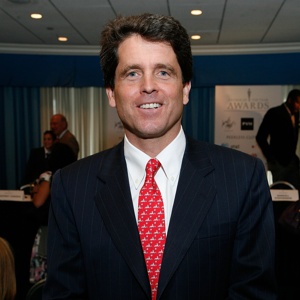
Maria Shriver's brother Mark has been taking his big sister's messy split from Arnold Schwarzenegger hard. Friends of Mark who have seen him at the Congressional Country Club in Bethesda, Md., say the normally gregarious head of Save the Children has been keeping to himself recently, even brushing off concerned friends. 'His ego seems bruised by the whole thing,' a pal of his told us. 'Losing his parents [Eunice and Sargent Shriver] was hard enough. I think he saw Arnold as the new patriarch of the family." A rep for Mark didn't get back to us." (PageSix)


"The talk of London, or at least the talk of our bus-riding London friends, is the new ad campaign by the Tunisian Tourist Board (also noted by the L.A. Times’ middle east blog). As the old saying goes, revolution stops at the all-inclusive beach resort. Except in Cuba." (VanityFair)

"AOL’s hyperlocal news website – Patch – is going to take advantage of the 2012 presidential election. AOL plans to add 33 sites, including ones in Iowa, South Carolina and New Hampshire, states where voting starts earlier. It’s also expanding the Huffington Post’s Washington, D.C. site.
According to Bloomberg, Howard Fineman, Editorial Director for The Huffington Post, even added that the site might sponsor a presidential debate. 'We’re talking about it, and we’re talking to potential partners,' he said. There are currently over 800 Patch sites, and that’s without counting the 33 new ones. And all the sites have been losing tons of money." (FishbowlNY)


"Director Brett Ratner threw a party for cooking queen Katie Lee at his lavish Hollywood home, Hillhaven -- the former home of Ingrid Bergman and James Caan -- to celebrate the launch of her first novel, "Groundswell." The protagonist somewhat resembles Lee, ex-wife of Billy Joel, in a story about a famous marriage and rumored affair. The intimate party for 50 included Hollywood elite like James Toback, Toby Emmerich, Brian Grazer and Jonathan Glickman." (PageSix)


"Before Dinosaur Jr. took the stage, Henry Rollins (aka the second Black Flag frontman on stage that night) conducted a much-anticipated interview with the band. Henry was a great person to interview Dinosaur Jr. Not only is he arguably the best speaker in punk rock, but the admiration between Dinosaur Jr. and Henry Rollins for each other was so clear. Henry opened his interview by telling us he is a 'XXXL Dinosaur Jr. fan,' and during the interview, when asked which live shows were influential on them, Murph mentioned Black Flag. In the interview they discussed things like how Dino got their start, the independent music industry, Husker Du (whose frontman Bob Mould should have been at Terminal 5 instead of 92YTribeca), Lou's departure from the band, and other related topics." (BrooklynVegan)

Thursday, June 23, 2011

Southies React to the Capture of Whitey Bulger


All day long today I have been practicing my Boston pronounciation of "Whi-TEEE BUH-GUHHH"
Henry Kissinger and Aaron Freidberg on China


In China's rise Henry Kissinger finds a subject perfectly suited to his bloodless, reptilian amoral gaze. And a 87, On China is probably Kissinger's Summa. Kissinger is often referred to as a foreign policy "Realist," although his fellow travelling with the neocons during the Bush administration could either be interpreted as the ultimate act of realism (bending one's towards the regime in power) or as an act of philosophical cynicism.
Aaron Friedberg, a true blue neocon, also writes a book on China. Andrew Nathan reviews both Kissinger and Friedberg's approaches to China and comes up with some great thoughts. From Foreign Affairs:

As a connoisseur of fine diplomacy, Henry Kissinger finds a lot of it to admire in China. His new book, cast as a history of Chinese foreign policy, traces the twists and turns of Chinese strategy since the establishment of the People's Republic in 1949, quoting liberally from his numerous conversations with Chinese leaders. But On China is really neither history nor memoir. Its purpose is to argue that the United States should yield gracefully to China's rise in order to avoid a tragic conflict.

Aaron Friedberg gives the opposite advice. A Princeton professor and former foreign policy adviser to Vice President Dick Cheney, he analyzes the strategies that China and the United States have used in dealing with each other since the early 1990s and tries to decipher China's intentions in the coming decades. In the face of growing Chinese power and ambition, the United States, he argues, must stand strong in those many areas in which China's interests are adverse to its own. Together, the two books offer a window onto the strategic split over China among mainstream Republicans.

Kissinger likens Chinese diplomacy to the game of wei qi (equivalent to the Japanese game of go), a patient contest of encirclement in which victory is only relative. Chinese strategists view the quest for a decisive outcome as illusory. Instead, they play a game of "combative coexistence," seeking to improve their relative power position amid the ever-changing forces of world politics. At the necessary moment, one may deliver a salutary psychological shock and then withdraw, as the Chinese did to the Indians in 1962 to put a stop to incursions along their contested border, and as they did to the Soviets in 1969 to deter Moscow from probing Chinese positions along their frontier. On other occasions, one may hide one's light and bide one's time, as Deng Xiaoping famously advised his colleagues to do in 1991, telling them to maintain good relations with the United States while building up China's strength. Or it might be useful to claim hurt dignity and designate a whole topic as nonnegotiable, as Beijing did in 1993-94 when U.S. President Bill Clinton tried to make favorable tariff rates conditional on improvements on human rights, and as it is doing today over territorial issues.

Andrew Nathan feels that both Kissinger and Freidberg exaggerate Chinese power (though, admittedly, it is hard to see how), believing that its rise will continue unabated. Both, according to Nathan, argue that the United States should resist attempts at derailing China's rise, considering it an inevitable event. Is it?

Two strategies of classical Chinese diplomacy mentioned in both books are: 1) giving the appearance of friendship, particularly when not at full strength, and, 2) promoting the relativity of ideologies (putting America, an idealistic nation, at the disadvantage). Andrew Nathan concludes, sharply, "It is no wonder that Chinese statecraft aims to establish the cultural relativity of human rights and to pose talk of human rights as the enemy of friendship."  Indeed.

He has many other great observations. Read the full review here.
Media-Whore D'Oeuvres

"There has been considerable progress in Afghanistan in recent times, and this should reassure those Americans who fear that the current strategy is a fool's errand. On a visit to Helmand province and Kandahar last month, for example, I saw considerable evidence of positive momentum - Afghan forces now providing half of all coalition personnel for combined operations; roads in central, populated areas now safe enough to drive for residents and government officials alike; roughly a 50 percent increase in school attendance in Helmand over just the past year and a half; a 50 percent reduction in poppy harvests as more farmers move to legal crops; a doubling of the number of government positions at the provincial and district levels that are filled and functioning. The killing of Osama bin Laden is also a success of the broader strategy. Still, Mr. Obama had to contend with unpleasant realities concerning lack of full cooperation with allies in Kabul and Islamabad and continued levels of violence in Afghanistan that have not yet declined from historic highs. So he could only go so far in selling the mission as a success and only so far in shoring up American political will to sustain the effort. Again, the plan he has announced is reasonably solid under the circumstances, even if I would have preferred a 2011 drawdown only half as large. How will this troop drawdown likely influence efforts on the ground?" (Brookings)


"One tries to read, but the mind keeps wandering off toward the Sportzentrum a couple of miles away. Who has entered and where are they from? Are the menacing-looking Russkis as good as advertised? What about the shaven-headed Jap that beat me last time? And those tough, tough Germans—are they back? The answer is yes on every count. This was the toughest and deepest field ever. What bothers me about sportswriting is that no matter how knowledgeable the hack might be, no one—and I mean no one—knows what it’s really like until they’re on the mat facing the foe with a disinterested ref trying to act official. There is no goalkeeper behind you, no defenseman, no attacker up front—only you and that beastly subhuman across from you. Do that for fifty years or so, mano-a-mano every time, and then pick up the quill and write about it. But watching from the sidelines you do not really know. You think you do, but you know squat. The polite way of putting it is that fighting in judo, karate, or boxing tournaments is character-building. It tests one’s strength, but more so one’s character. Judo is one of the most tiring sports around. You’re at it nonstop and always full-out, no coasting or resting in between attacks. One’s at the limit almost from the start, and the temptation to quit is ever-present. And quitting is very easy ...  There is also no room for spoiled little rich boys or girls. I know a few rich men who practice martial arts, but all they’re doing is fooling themselves." (Taki Theodoracopoulos)

"Much like the crimson-coiffed woman of the evening—NYLON’s July music issue cover star Florence Welch—there was something decidedly ethereal and rarefied in a downtown, kinda-hipster way about the ambiance at last night’s private dinner hosted by Welch, the mag's leather bomber and shades-clad EIC, Marvin Scott Jarrett, and Habitual Denim atop the Mondrian Soho. As one those blissful, so-overdue breezes after a sticky June day—the summer solstice, no less—rustled the tinkling, slender chandelier up above, there was much to focus on plateside for a small roundup of seriously chic guests like Leigh Lezark, Scott Lipps, Kellan Lutz, Shanae Grimes, DJ Harley Viera-Newton and Fischerspooner’s Casey Fischer. Imperial No. Nine chef Sam Talbot was in the kitchen, whipping up shareable platters and tureens in a delectable procession beginning with raw tuna rubbed in mustard seed and grapefruit, sautéed beets in a glorious bleu cheese and almond semifreddo, plus pearls of couscous crowned with mushrooms and asparagus. Then the big guns rolled out, in the form of massive King crab legs, delicate roasted branzino atop flakes of kale and a bed of bulgur grains, and thick, ruby-hued cuts of beef la plancha nestled atop potatoes roasted in duck fat. Di-vine! Kanon Organic Vodka took care of the tipples, and People’s Revolution’s Kelly Cutrone took care of the maternal doting." (Fashionweekdaily)

"Last night Lord and Lady Evelyn de Rothschild held a cocktail reception at their apartment overlooking the East River and Roosevelt Island for donors to the Franklin D. Roosevelt memorial known as Four Freedoms Park that broke ground last year and will be completed next year. Originally known as Blackwell’s Island, and then later Welfare Island, it was renamed after our 32nd President in 1973 under the administrations of Governor Nelson Rockefeller and Mayor John V. Lindsay. The memorial, which will occupy four acres on the southern tip of the island directly across the UN Building, was designed in 1974 by architect Louis Kahn. William vanden Heuvel, the lawyer, diplomat, political adviser and founder of the Franklin and Eleanor Roosevelt Institute in Hyde Park, New York has been a moving force behind the actualization of the park along with Tobie Roosevelt, the widow of Franklin D. Roosevelt Jr. Lord and Lady Rothschild made an original donation of $50,000, and last night announced another $250,000 donation. So far $48 million has been raised with another $4 million to go." (NYSocialDiary)


"(Masterpiece Theater Executive Producer  Rebecca Eaton's)  major effort in that cause was a brand makeover three years ago. Her mission: to freshen up the "Masterpiece" image for younger viewers without putting off the 'Masterpiece' faithful. Research found the series had a fusty, veddy-proper image in some eyes, while the word 'Theatre' in its title felt old-fashioned, even off-putting. The mixed bag of programs from week to week also struck some viewers as confusing.
'You might watch Jane Tennison one week and Jane Austen the next week, and then Jane Eyre,' Eaton recalls. Unveiled in December 2007, the reinvention effort trimmed 'Theatre' from the series' name, and gathered programming into what the series calls strands: 'Masterpiece Classic,' 'Masterpiece Contemporary' and, absorbing its sibling 'Mystery!' anthology series that had been a PBS fixture since 1980, 'Masterpiece Mystery!' Each even came with a color-coded host. (Note how 'Masterpiece Mystery!' host Alan Cumming is stylish in a dusky suit with blood-red tie and pocket handkerchief, hewing to the signature 'Mystery!' color scheme.) The rebranding has been a big success. 'Masterpiece' claims a 50 percent growth in viewership last season, and even old-timers are resisting the urge to call it 'Masterpiece Theatre.'" (HuffPo)

"After years of refusing to release her boy-wizard books in electronic format, Harry Potter mastermind J.K. Rowling is finally taking the digital plunge, launching an online store that will sell Harry Potter e-books directly to consumers and a social-networking site designed to keep the Potter magic alive. The free-to-access site, known as Pottermore, launches for the first million users on July 31 and opens to the general public—with the online e-book store—in October. Once the online store opens, the full Harry Potter series will be available as e-books in multiple languages, compatible with any electronic reading device. Ms. Rowling has made a bold move in going direct to consumers to sell her e-books, instead of relying on online retailers like Amazon.com Inc. and Apple Inc.'s iBookstore. Whereas publishers for other authors often own both the print and digital rights for books, Ms. Rowling owns the rights to the digital versions of the Harry Potter books herself. The digital rights aren't held by her U.K. publisher Bloomsbury Publishing PLC, or by Scholastic Inc., which owns the U.S. print rights. Bloomsbury said in a statement Thursday that it would be receiving a share of the revenues derived from e-book sales in Pottermore's online store. Pottermore is a full-on Harry Potter online universe that allows readers to join a Hogwarts house and travel through the first Harry Potter book, while collecting points and playing games. Perhaps the biggest draw is the extra material that Ms. Rowling has written and unearthed from her notes, which gives intense Potter fans much-desired background and explanations about key characters, places and plots." (WSJ)


"You have two characters, Don and Peggy, whose lives are intertwined in a very interesting way. He knows about her secrets, she knows about his secrets, but they don’t talk about them when they’re in a professional environment. And here was this moment where Don was very vulnerable. He had spent the season basically dealing with being divorced and alone, drinking too much, breaking a lot of his personal rules, sleeping with his secretary, just being very self-destructive, everything. And of course this person doesn’t have a shrink or a bartender or any friends, and that’s also part of his machismo on some level to hold his secrets inside. And Peggy has her own life. And the idea that they could collide at that moment of this historic boxing match that was over in 90 seconds was a chance for a lot of the unspoken tension in the show to sort of come out for people who had been holding in their feelings for so long. And it was beautifully directed, and the performances are spectacular, and I had nothing to do with that. These few actors just rose to the occasion, and you get this non-saccharine emotional connection between two people you really care about. So it became a very special episode in the old-fashioned Emmy sense." (Matt Weiner/Deadline)


"'For me, after a career in public service, I didn’t have much of a bank account that would fund self-reflection and exploration, so I got after it,' (former Congressman Earl Pomeroy) said. Several other lawmakers who left Congress at the end of last year took the same tack — allowing for a short period of time to regroup but otherwise returning to work without going on the sort of longer respite that many could argue they deserve. What they’ve found: There is life after Congress, it’s good, and opportunities to continue working on policy abound. 'I don’t miss it,' former Rep. Bill Delahunt (D-Mass.) said of Congress. After 14 years on Capitol Hill, he was ready for a change. But he wasn’t looking to retire. Delahunt returned to Boston, started the Delahunt Group, a consulting firm, and also joined Eckert Seamans as special counsel. 'I can’t say there’s been a lot of relaxation,' he said. 'I wanted to stay engaged in public policy' ... Former Rep. Zach Wamp (R-Tenn.) already has a consulting business set up in his home state, working on issues ranging from nuclear energy to workforce development, and though he still travels some, he said he works at 'a much better pace' now ... For as hard as they continue to work, these former lawmakers now have control of their own schedules — and for the most part, they love it. Wamp said he and his wife now 'spend more time together than over the last 16 years because I was gone half the time.' 'You can say no a lot more readily now, and when the buzzers go off, you don’t have to run to vote,' Delahunt said. 'You can take control of your life again.' (former AK Senator Blanche) Lincoln and her husband were finally able to take a getaway to celebrate their 50th birthdays. But perhaps because they’re naturally busy people, most former lawmakers interviewed said the only way to slow down is to retire." (TheHill)

Wednesday, June 22, 2011

President Obama's Rough Week

It is only Wednesday, but Obama is already having a really bad week. The President is being pilloried by both the Right and the Left flanks. Ambassador Jon Huntsman's announcement that he is running for President realizes an eventuality that the Obama team didn't want to see happen. The House Republicans are mounting a challenge on his Libya mission. Congressman Dennis Kucinich, from crucial Ohio, attracted 87 Republican votes for his failed June 3 resolution to end U.S. support for the mission. He is going to try again.

 More bad new from the left. Al Gore is attacking the president's environmental record in Rolling Stone. We can probably expect more of that as Gore is the founder of the anti-corporate, left-of-center, newly revamped Current TV. Still this has got to hurt. President Obama deeply respects Gore, even journeying to Tennessee out of respect in 2008 to make sure the former Vice President wasn't running.

Tonight the President will deliver an address -- about 10 minutes -- on the drawdown of American troops in Afghanistan. His announcement that 10,000 troops will be coming home by year's end will probably be met once again with attacks on the right and the left to bring all the troops home. A new poll for The Hill found that the overwhelming majority -- 72% of those polled -- believe that the American military is involved in too many places.

That number goes a long way in explaining why the Republican leaders in the House are moving so swiftly to address the president's authority in Libya.

And its only Wednesday.
Media-Whore D'Oeuvres


"The man who once labeled Wall Street honchos 'at cats'deserving of scorn for their role in the 2008 financial crisis will be back in town tomorrow, pressing the fat-cat flesh at the swanky Upper East Side restaurant Daniel for a $35,800-a-head fund-raiser. A number of top Wall Street executives will show -- but some faces will be missing. I'm told JP Morgan chief Jamie Dimon won't be there -- nor former Obama supporters like Lloyd Blankfein and Gary Cohn of Goldman Sachs, Brian Moynihan of BofA and John Mack of Morgan Stanley, nor even Larry Fink of the money-management firm Blackrock ... Many (me included) thought Wall Street was merely hedging its bets, hoping divided government would prove most profitable for its future. After all, the banks made a ton of money underwriting all the debt Obama has run up in massively expanding government. But those early cracks have widened in recent weeks ...Still, for all their grousing, big banks like Morgan and Goldman have done pretty well by Obamanomics -- earning huge fees for underwriting his massive expansion of government through the sale of government bonds, and making easy money thanks to the Fed's zero interest rates." (Charles Gasparino)


"Pundits in Washington have characterized President Obama’s decision to participate in a bipartisan 'olf Summit,'a friendly round of 18 holes that included Vice President Biden and Republicans John Boehner and John Kasich, as a conciliatory effort to reach across the aisle and embrace congressional opponents. But what if the president had an even more strategic political goal in mind? It’s possible that the carefully staged outing was designed not only to present him as a fair-minded, bipartisan leader but to remind rich campaign contributors that he’s a fan of upper-class pursuits, too. ecent news stories have indicated that Obama’s reelection team is implementing plans to win back powerful donors who abandoned the president after he took a hard line against Wall Street in the wake of the financial collapse. Last week’s high-profile golf match, which was shrewdly timed to coincide with coverage of the U.S. Open tournament at the Congressional Country Club in Bethesda, Maryland, might have been part of the president’s new initiative to recapture affluent benefactors. But I’m not sure palling around with Republicans over a gentlemanly game on the links is enough to satisfy scorned members of Obama’s elite fund-raising coterie. To retrieve their affection, the president may have to demonstrate even greater sympathy for the concerns of prominent financiers. What worries many vastly rich people about Obama is that despite his elegance and Ivy League manner, he can’t be counted on to defend the values of the upper crust." (Jamie Johnson)


"Last night I went down to Calvin Klein on 60th and Madison where the Young New Yorkers for the Philharmonic were holding their Summer Benefit cocktail party before dinner ... High end stores often host high end cocktail parties in New York these days. It’s usually wine and sparkling water and champagne. With waiters passing hors d’oeuvres. It’s also an ideal way to get people into the store. I talked to the three women from Calvin Klein who were overseeing the evening. One of the women told me she had already made a sale ... The crowd was generally 20- and 30-something. Women were in cocktail dresses and the men in suit and tie. It occurred to me that they were dressed just as their parents (and maybe even their grandparents) dressed at that age for such an occasion. What we used to call the look 'conservative' back when it signified modest, cautious, circumspect, prudent. Very early 1960s, before the liberation revoluntions. Before the Beatles came to America with the long hair ... These are great parties for young New Yorkers to meet other young New Yorkers, many of whom are ambitious to become a part of the community, to have a voice and an influence ...Two centuries ago in New York, these young people were attending dinners and concerts – often at the Academy of Music on East 14th Street. Their institutions dominated the culture; there was no competition. Lovers of music and the performing arts built what we have today in New York. Last night was one of the planting fields." (NYSocialDiary)


"How is this for intriguing mix of creative auspices -- filmmaker Spike Lee, former boxing champion Mike Tyson and Entourage creator Doug Ellin have come together to produce a drama series project for HBO, written by John Ridley and to be directed by Lee. The project, titled Da Brick, is described as a contemporary exploration of what it means to be a young, black man in supposedly post-racial America and is loosely inspired by aspects of Tyson’s youth. Is its set in current-day Newark, NJ, nicknamed 'brick city.' While the project is still in development, HBO has hired a casting director to explore casting choices for the lead, looking for young black actors who are also credible in the boxing ring. Tyson appeared in a 2010 episode of Ellin's HBO comedy series Entourage, playing himself. The original germ of an idea for Da Brick came out of a meeting the two had on the set of the veteran comedy, which was inspired by Mark Wahlberg's early years in Hollywood. 'That's when Mike asked me, why don't do with my life what we did with Mark's life,' Ellin said." (Deadline)


"(Jon) Huntsman spoke for a mere six minutes, without a microphone, before answering a smattering of questions with practiced, diplomatic vagueness. He introduced his wife, Mary Kaye, and two of his seven children: Liddy, who had just graduated from the University of Pennsylvania; and Gracie Mei, his adopted daughter from China who was celebrating her 12th birthday. The wait staff rolled out a chocolate-mousse cake with 12 candles. Earlier, Huntsman trapped a ladybug in his hands and presented it to her as a gift. 'We are the quintessential margin-of-error potential candidate,' he told the crowd. 'We’re in the early stages of due diligence, where you get around and have conversations with good people, where you share a little bit in the way of ideas, you reflect upon where your country happens to be. And that takes you into the future, where ultimately you make a decision we never thought we would be making.' 'Louder!' a woman in the back of the room called out at one point. 'Sorry, I’ve lost my voice,' Huntsman replied, although this was his first event on a five-day tour and, really, his normally soft voice sounded just fine. It was more that he seemed tentative and a little disoriented, the claustrophobic room swallowing his words. Back in the car, on his way to a sit-down with George Stephanopoulos, Huntsman turned to his strategist, John Weaver, and asked, 'Is it always like this?'" (Matt Bai)       


"Patricia Kluge, the saucy winemaker and one-time pin-up girl who became known as 'the wealthiest divorcee in history,' filed for personal bankruptcy protection this week. Kluge came into a reported $1 billion after splitting from media mogul John Kluge in 1990. The one-time star of UK adult film 'The Nine Ages of Nakedness' also got her hands on Albemarle House, a 45-room mansion on 3,000 acres in Virginia. But after living high-on-the-hog as a socialite hosting extravagant events for royalty, moguls and celebrities -- followed by a failed attempt to remake herself as a Virginia vintner -- Kluge, 62, crashed financially. She and husband William Moses have about $46 million in liabilities, according to their lawyer, Kermit Rosenberg. Earlier this year, Kluge moved to auction off her home and its contents. Donald Trump snapped up her Kluge Estate Winery & Vineyard in April after it defaulted on millions in loans. Kluge's remaining assets are now under control of a trustee who will dole out payments to creditors beginning July 15." (PageSix)


"Spider-Man star Tobey Maguire is among more than a dozen high-profile Hollywood people being sued in connection with a mega-millions illegal gambling ring that ran high-stakes underground poker games, Star magazine is reporting exclusively. Maguire, 35, won more than $300,000 from a Beverly Hills hedge fund manager who embezzled investor funds and orchestrated a Ponzi scheme in a desperate bid to pay off his monster debt to the star and others, it's alleged. An FBI investigation into Brad Ruderman, the CEO of Ruderman Capital Partners, uncovered how he lost $25 million of investor money in clandestine poker games held on a twice weekly basis in suites at the luxury Beverly Hills hotel, Four Seasons, and the Viper Room on Sunset Boulevard. Tinsel town A-listers Leonardo DiCaprio, Ben Affleck and Matt Damon also played in the no-limit Texas Hold 'em games which had a buy-in of $100,000, multiple members of the ring told Star." (RadarOnline)


"The taxi driver to the Beirut airport tells me that yom al-qiyama (the day of judgment) is approaching. There will be a big explosion soon -- a very big explosion. The revolutions sweeping the Arab world are not good. Islamic parties will come to power everywhere. There will be no more Christians left in the Middle East. Believe me, believe me, he insists. In anticipation, he will make the hajj to Mecca this year, inshallah. I tell him that I am traveling to Iraq as a tourist. The look he gives me in the rearview mirror says it all: He thinks I am crazy. I am heading back to Iraq nine months after I left my job as political advisor to the commanding general of U.S. Forces-Iraq. Earlier this year, a sheikh emailed me from his iPad, 'Miss Emma we miss you. You must come visit us as a guest. You will stay with me. And you will have no power!' I am excited and nervous. The plane is about a third full. I am the only foreigner. I look around at my fellow passengers. I wonder who they are and whether they bear a grudge for something we might have done. The flight is one and a half hours long. I read and doze. As we approach Iraq, I look out the window. The sky is full of sand, and visibility is poor. But I can make out the Euphrates below." (ForeignPolicy)

Tuesday, June 21, 2011

A Little of the Old In and Out


In: Serena. At the tender age of 29, Serena Williams is not yet  done with the sport of tennis. On the first day of summer an emotional Serena Williams, the former world number one women's tennis player, bested Aravane Rezail at Wimbledon. Eeven months after her last appearance, the defending champion, now seeded seventh, won an emotional, tough match. Serena is back. From The New York Times:

Serena Williams’s first match at a Grand Slam tournament in nearly a year was over, and she was crying as she waved to the Wimbledon crowd, crying into her towel, crying as she walked off one of the courts where she has defined her career.

But these were not tears of farewell or disappointment Tuesday. They were tears of release and relief after a 6-3, 3-6, 6-1 victory over Aravane Rezaï in the first round and after a year of major health problems and major doubts about whether she would return to the game.        
“I usually don’t cry, so I don’t understand it, but it’s just been so hard,” Williams said. “ I never dreamt I would be here right now.”
The injuries ( two operations to repair a torn tendon in her right foot) and health problems (blood clots in lungs) that have plagued her in the last year appear -- at least for today -- just that: in the past. You go, girl.


Out: Newtie. And speaking of the past ...

Newt Gingrich ought to have run for President in 1996. That was his time. The political winds were more at his back then than now when Bob Dole was handily defeated by the Clintonistas. Now, to be frank, Newt is way past his expiration date. Unless Gingrich is in fact running for President to be Secretary of State -- a position that might be tenable and a Department in which he has shown real interest -- then he is naught else but a simple fool. Worse: He is becoming a laughingstock.

Today his fundraising team quit. "Now all his fundraisers have quit," mocks Andrew Sullian. "Could this be one of the worst campaigns in memory?" It certainly looks worse that Rudy Giuliani's flamout in Florida in 2008 because as bad as it was, at least Rudy's campaign got off the ground.

The walkout of Newtie's fundraisers follows on the heels of the en masse departure onlt two weeks ago of a dozen staffers — including key operatives in states like Iowa and South Carolina, the campaign manager and his chief strategist. Finally, Newt, a neoconservative fellow traveller, is regularly attacked by neoconservatives -- his base -- like when John Podhoretz recently wrote: "Newt Gingrich never received more than 100,000 votes in his life. He'll never be president." We won't entertain the hoo-ha over his intramural contretemps with Congressman Paul Ryan, a fiscal conservative hero.

With friends like those ...


In: Isolationism. A recent Pew poll found that majorities in every partisan group – including more than half of conservative Republicans – said that the United States “should pay less attention to problems overseas and concentrate on problems here at home.”

America First, a persistent if minor theme in recent American history, is on the rise. In times of great stress -- like, for example, in times of  9.1% unemployment and a trillion-dollar deficit -- America naturally veers towards isolationism. Libya -- more precisely the President's not informing Congress of his intentions there -- appears to have been the last straw. Jacksonian essays are springing up like cherry blossoms. As Doug Bandow writes on Forbes:

Over the years “isolationist” has been routinely used to libel people who don’t want the U.S. government to wander the globe bombing, invading, and occupying other nations and writing checks to assorted corrupt thugs, vicious authoritarians, and incompetent socialists. Isolationist also has been applied to those who believe the Constitution reserves to Congress the authority to start wars. The only way to avoid the epithet is to be a profligate spender and promiscuous warmonger who routinely violates the Constitution.

America, and more important, Americans, should engage the world. Except in highly unusual circumstances, the U.S. government should maintain political relations with other nations. Transnational issues—refugees, environment, proliferation—warrant transnational cooperation. On the rare occasion when America has truly vital interests at stake, military action may be justified.

The most important activities between nations should be between peoples. Trade and investment, culture and sports, education and travel, economic development and humanitarian assistance, and much more. The proper presumption, in a free society at least, is that most human action and exchange take place outside of government. 
Minimizing political entanglements, as George Washington famously advocated in his Farewell Address, is not isolationism but prudent engagement.
The public mood seems to be moving in an isolationist direction. In Iraq, in Afghanistan. And, one wonders, will the President's moderate troop withdrawals in Afghanistan be on the wrong side of history? Will a Rick Perry or a Jon Huntsman take advantage? Will the GOP candidate best able to articulate an isolationist, pro-jobs philosophy win the Republican primary and present the strongest challenge to the President?

At the moment it certainly appears so.
TV Is Still The Largest Advertising Medium


Despite the fact that Americans are spending more time on their digital gadgets, big advertisers are still committed to television. ZenithOptimedia forecasts that global TV ad expenditure will rise from $180.3 billion in 2010 to $216 billion in 2013. Further, by 2013 television ads will account for 42 percent of that market. From Bloomberg:
WPP Plc (WPP) and Publicis Groupe SA (PUB) are racing to expand their Web and mobile-phone advertising businesses to catch consumers’ attention. Microsoft Corp. (MSFT) says they shouldn’t forget a much more traditional route: television.

There has “never been a better time for TV advertising to seize the moment,” Microsoft Advertising and BBDO Worldwide, a unit of the world’s second-biggest ad company Omnicom Group Inc. (OMC), said in a study released today. The survey among 1,500 consumers in the U.S., China, Russia, the U.K. and Saudi Arabia shows that “TV is a rich, powerful medium and advertisers should continue to be making great ads for it.”

The call by the world’s biggest software maker, which spent $1.6 billion on advertising last year, is targeted at top marketing executives gathering this week along the Cote d’Azur in Cannes as they find the right balance between traditional print and TV advertising and newer platforms such as computers, tablets and mobile phones.

While digital advertising has the fastest growth rate, TV is able to stay relevant because of new technology such as digital video recorders and surround sound, as well as rising viewership in developing markets, says ZenithOptimedia, the research unit of the world’s third-biggest ad company Publicis.

The ZenithOptimedia study also found that the internet is to become the world’s second-largest advertising medium in 2013, overtaking newspapers.

"Though the Web has stolen share from print advertising, which is expected to continue its decline," writes Emily Steel in the WSJ, "marketers say television continues to dominate because of its wide reach and the story-telling potential of TV spots." That may explain why internet sites like Gawker and Yahoo! are veering more and more towards becoming video destinations (to better accomodate those ads, one imagines, in large part). It also might explain why cool branded content outfits -- like the Lonely Islands -- might be very forward-looking.